How often to pump, what a pump-out visit involves, EPA-verified pricing, and TCEQ rules on who may haul the waste.
What pumping does, and when your tank needs it
Most household septic tanks need pumping every three to five years — the interval both the EPA and TCEQ recommend. Pumping removes the two layers your tank can never clear on its own: sludge, the solids that sink, and scum, the grease and light solids that float. Bacteria shrink both layers, but never fast enough. Wait too long and solids ride out with the liquid and clog the drainfield — the expensive half of your system.
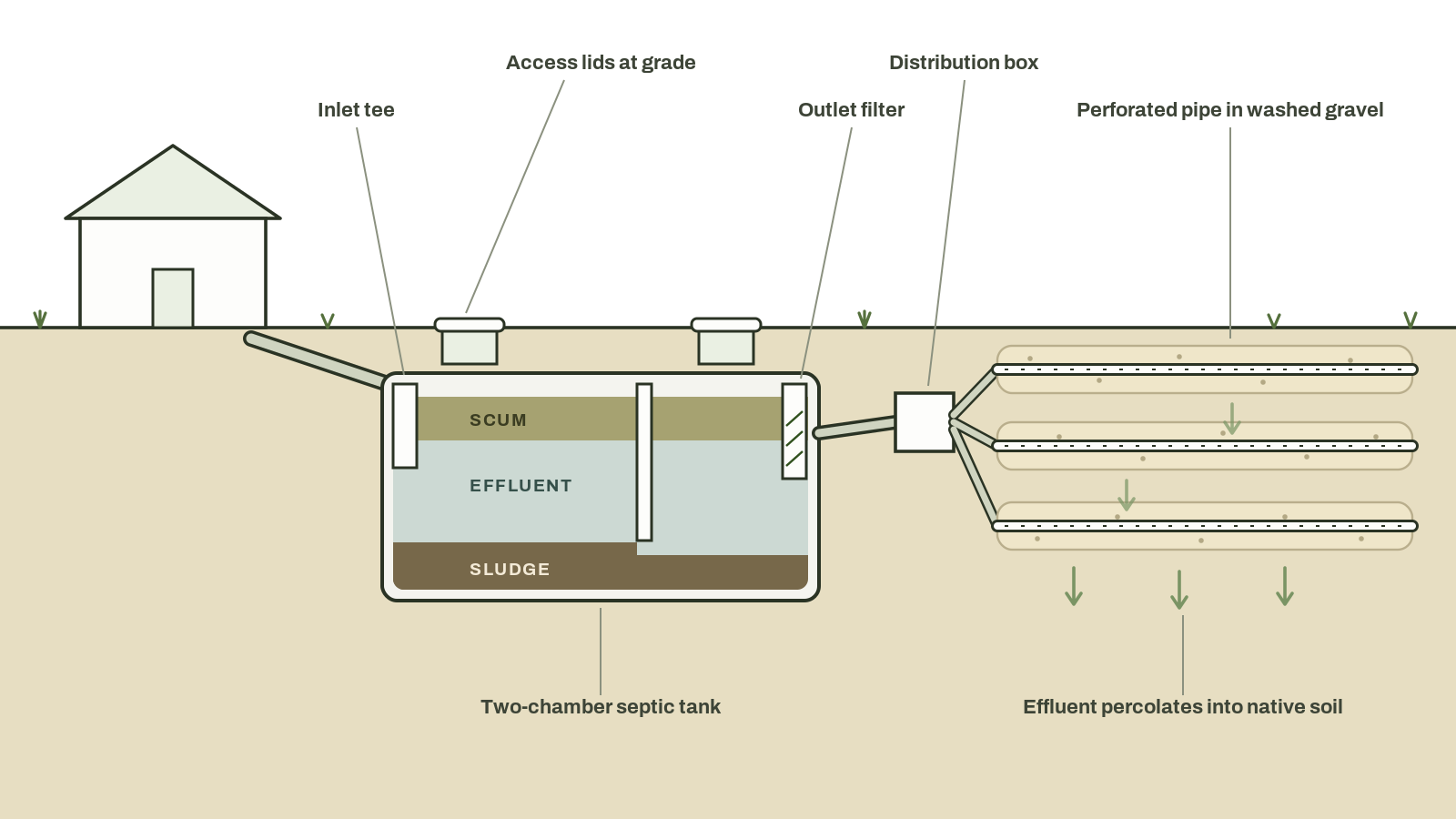
How a conventional septic system is laid out, inlet tee to drainfield.
The real trigger is not the calendar. EPA’s rule: pump when the bottom of the scum layer is within six inches of the tank outlet, when the top of the sludge is within 12 inches of it, or when sludge and scum together fill more than 25 percent of the liquid depth. A service pro measures this in minutes. Household size, water use, and tank size set your pace, and a garbage disposal alone can shorten the interval by one to two years (Texas A&M AgriLife Extension).
Signs you are overdue:
Slow drains through the whole house, or gurgling pipes
Sewage odor near the tank or drainfield
Wastewater backing up into tubs or floor drains
Standing water or unusually green grass over the drainfield
No record of a past pump-out — common right after buying a home
Quiet is not proof of health. EPA notes a never-pumped tank that causes no trouble may simply be leaking into the ground, or packing in solids that are migrating toward the drainfield.
How a pump-out visit works
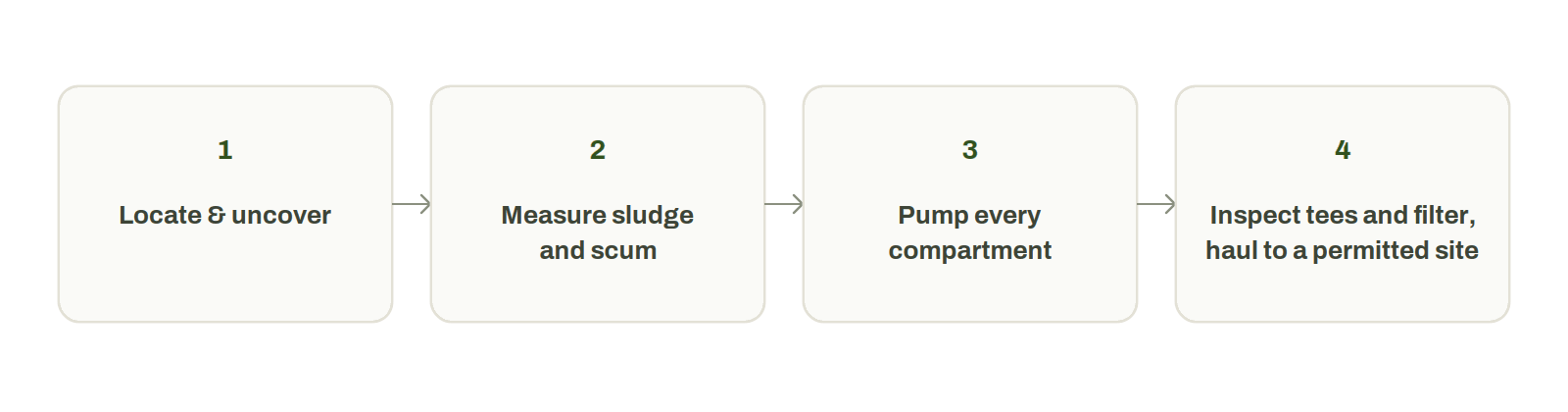
A routine pump-out is a six-step job: locate, uncover, measure, pump, inspect, haul. A competent crew will:
The four steps of a routine pump-out visit.
Find the tank from your permit’s as-built drawing (your county permitting office keeps a copy) or by probing
Dig to the service lids, or open the risers if you have them
Measure sludge and scum before pumping — keep those numbers; they reveal your true pumping pace
Empty every compartment through the service lids, breaking up the scum mat — not a partial suck through a small inspection port
Check the inlet and outlet tees, clean the effluent filter if present, and look for staining above the outlet or a low water line that signals a leak
Haul the septage to an authorized disposal site and leave you a written service record
In Texas, only sludge transporters registered with TCEQ may pump and haul septic waste. Every company on our county directory pages is listed with its state credential checked, so you can confirm the truck in your driveway is legal before it leaves with your money.
What septic pumping costs
EPA puts routine septic maintenance, including pumping, at $250 to $500 every three to five years (EPA, 2026). That figure is the whole argument for staying on schedule: the same page pegs repairing or replacing a malfunctioning conventional system at $5,000 to $15,000, and more for alternative systems. Our Texas-specific survey figures — by tank size and region, with named, dated sources — live in the cost guide. Expect quotes to move with tank size, digging time, and disposal distance, and request local quotes rather than trusting a national average.
Texas rules
Texas puts no legal pumping schedule on conventional tanks — TCEQ’s every-three-to-five-years is a recommendation — but the state does regulate who hauls the waste and what happens when pumping uncovers damage. Three rules worth knowing:
Registered haulers only. Pumping and transporting septage requires TCEQ registration (TCEQ). An unregistered “cheap guy with a truck” can dump illegally under your name on the manifest.
Aerobic tanks follow different logic. TCEQ says pump them based on sludge depth and the manufacturer’s guidance — and pumping is separate from the mandatory service visits those systems require.
Damage found during pumping may need a permit to fix. Replacing tank lids, inlet and outlet devices, or riser caps counts as emergency repair that can start immediately with written notice to your permitting authority within 72 hours (30 TAC 285.35, per TCEQ). Bigger work needs a permit first — our Texas permit guide walks through it.
Septic pumping questions, answered
Short answers to the questions Texas homeowners ask most about pumping.
How often should a septic tank be pumped in Texas?
Every three to five years for a typical household, per EPA and TCEQ. Your real interval depends on tank size, how many people live in the home, water habits, and whether you use a garbage disposal, which can shorten the cycle by one to two years. Measured sludge and scum levels from each visit tell you your exact pace.
How do I know when my septic tank is full?
A tank is always “full” of liquid — what matters is solids. EPA’s thresholds: pump when scum comes within six inches of the outlet, sludge within 12 inches of it, or sludge plus scum exceed a quarter of the liquid depth. Only opening the tank and measuring tells you; backups and odors mean you have already waited too long.
Can I pump my own septic tank in Texas?
Realistically, no. Texas allows only TCEQ-registered sludge transporters to pump and haul septage, and disposal must go to an authorized site. Beyond legality, an open septic tank produces toxic gases and has drowned would-be DIYers. This is one of the few septic tasks with no legitimate do-it-yourself path.
Do septic tank additives mean I can pump less often?
No. EPA says additives are unnecessary — the tank already holds a thriving microbial population — and warns some products can hurt drainfield performance or push solids out of the tank. No additive removes solids from the system. Only a pump truck does that, so spend the additive money on pumping instead.
Where does the waste go after pumping?
The registered transporter hauls your septage to an authorized facility — typically a treatment plant or a permitted land-application site. Handling of this material is regulated at the state level and, for biosolids disposal, under federal EPA rules. Your service record and the hauler’s manifest document where your load went.
For septic pros
Do this work for a living?
We track 18,335 state-listed pros in Texas, Ohio, Pennsylvania, Minnesota, Tennessee, Alabama and Missouri — yours may already be listed. Create or claim your free profile and get quote requests from homeowners in the counties you serve.
Pumping, an inspection, or help fixing a septic system: tell us once and we send it to up to 3 verified pros. Free, no spam, delete your request anytime.
Secure form. Sent over an encrypted connection to up to 3 verified pros. Never sold to data brokers, and you can have your request deleted anytime.